
Hello, lovely.
I'm so glad you're here.
If you've found your way to this guide, chances are you've started wondering what's actually in the things you bring into your home. The cleaning spray under the sink. The laundry powder. The bottle of something lovely-smelling on the bathroom shelf.
I remember that feeling well, because I've been walking this path since 2013.
Here's the most important thing I can tell you before you turn the page: low-tox living is not about perfection, and it is absolutely not about throwing everything away tomorrow. It's about reducing your overall toxic load, one small change at a time, at whatever pace suits your family and your budget.
This is the guide I wish someone had handed me at the start. No scare tactics, no fifty-item lists, no pressure to replace your whole house in a weekend. Just the swaps that made the biggest difference, in the order I'd make them again.
Take what's useful. Leave the rest for another day.
Jasmine Elena
What low-tox actually means
Low-tox living simply means lowering the total amount of synthetic chemicals your body deals with day to day.
That total is sometimes called your toxic load or body burden. No single product is usually the problem. It's the accumulation: the spray you use on every surface, the detergent on every piece of clothing, the moisturiser you apply every morning, all adding up quietly over years.
Which is genuinely good news, because it means the goal isn't zero. Nobody is toxin-free, and anyone who tells you they are is selling something. The goal is simply less.
It also means the maths works in your favour. You don't need to get everything right. You need to change the handful of things you're exposed to most often, and let the rest happen slowly.
The 80/20 of it
What you do every single day matters far more than what you do occasionally. A plastic fork once in a while is not the same as microwaving your lunch in plastic every day.
Why I started
My low-tox journey began back in 2013.
Not long after meeting my (now) husband, he introduced me to a completely different way of thinking about health. He'd spent years reading about nutrition and everyday environmental exposures, and our conversations sparked my curiosity.
He encouraged me to think differently about things I'd never questioned before, like non-stick cookware, fluoride in toothpaste and tap water, and whether using a microwave was the best way to heat our food. Those conversations inspired me to start doing my own research, and they led to the very first changes I made: switching to fluoride-free toothpaste, replacing our non-stick pans and eventually filtering our drinking water.
At first, that was enough. I wasn't trying to overhaul our home or become "perfect." I was simply making small changes that felt right to me.
Everything changed again in 2017 when I had my first daughter.
Like so many new mums, I wanted the very best for her. I found myself asking more questions, reading more books on natural health and nutrition, and becoming much more aware of the products we were bringing into our home.
Then, in 2020, I really went down the rabbit hole. I started researching ingredients, household products and everyday exposures in much more depth, and that's when all the pieces started fitting together.
Every stage built on the last. Some swaps happened quickly, while others took me years. Every single change happened when it felt right for our family and our budget.
Thirteen years later, I'm still learning. I'm still making changes. And I think that's exactly the point.
Low-tox living isn't about getting everything "right." It's about making better choices as you learn more, one small swap at a time. I hope this guide helps you make your very first swap.

The Low-Tox Pyramid
Not everything matters equally, and nobody tells you that. Start at the bottom, where the changes are cheapest and touch you most often. Work up only when you're ready.
Read it bottom-up
The widest band is where your money and effort do the most good. The narrow tip is the expensive, occasional-contact end. If you never get there, you'll still have made an enormous difference.
Your first week
If you do nothing else with this guide, do these six things. Most cost nothing at all, and together they cover the biggest daily exposures in an average home.
- Filter your drinking water
- Stop microwaving food in plastic
- Switch to a fragrance-free or naturally scented laundry detergent (like Miniml)
- Bin the plug-in air fresheners
- Read one ingredients label today
- Open your windows for ten minutes
Tick them off as you go. There is no deadline, and no prize for finishing early.
Swap 01 · the one I'd do first
Water
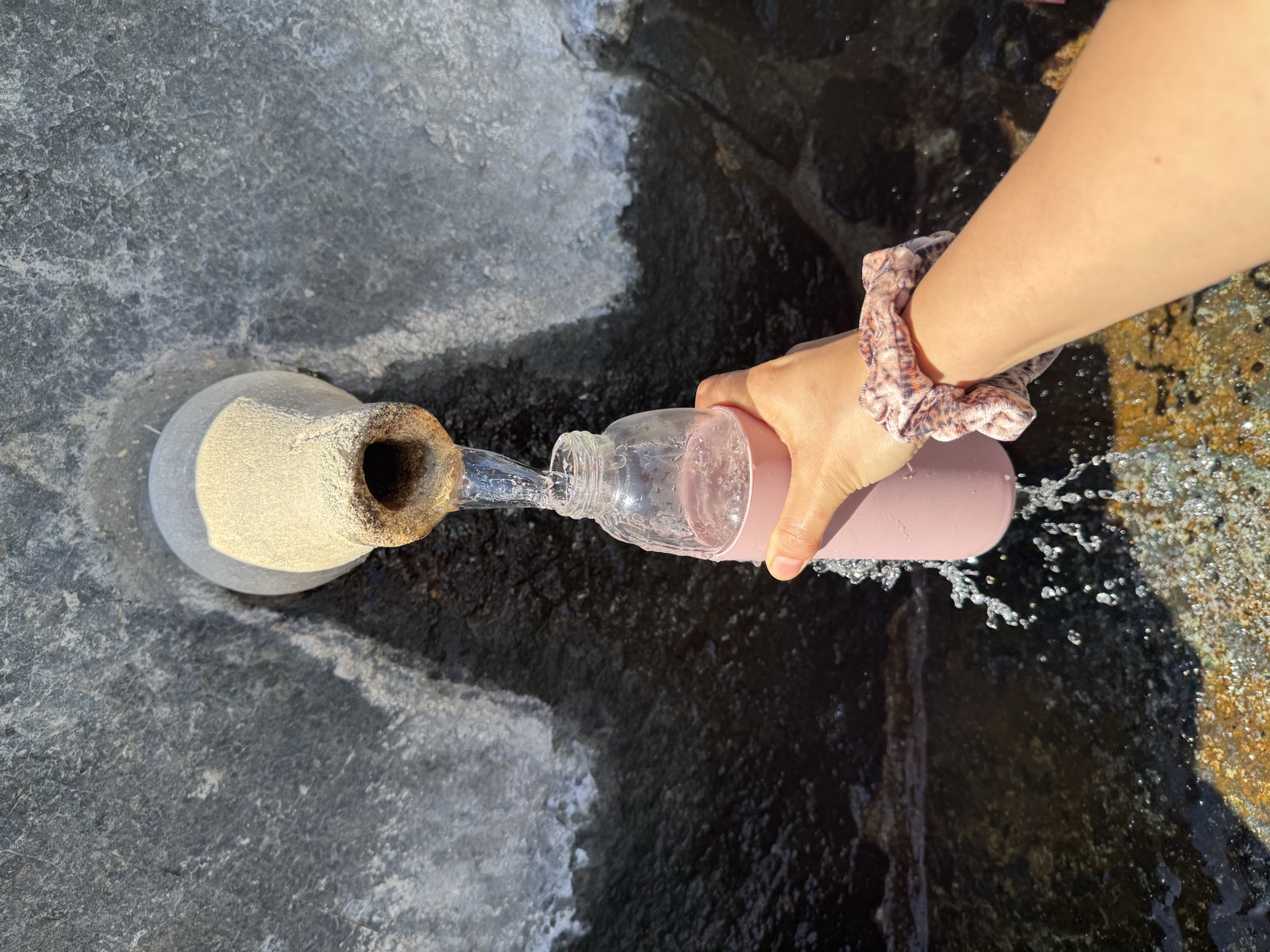
This was the easiest swap to make, and arguably the most important.
Why it matters
Water is involved in almost every process in our body. It transports nutrients, regulates temperature and helps carry waste out, so the quality of what we drink every day genuinely matters.
Our bodies are made up of around 50 to 75% water, and we lose roughly 2.5 litres over 24 hours through breathing, sweating and going to the toilet. All of that needs replacing.
UK tap water is treated, but it can still carry chlorine by-products, microplastics and trace pharmaceutical residues that standard jug filters aren't designed to remove.
What I did
- I started by swapping tap water for bottled. The more I read, the more I realised bottled wasn't the answer either.
- Eventually we installed a Water2 under-sink filter with the additional fluoride filter, and I haven't looked back.
- When we travel around the UK I bring The Watery, a countertop reverse osmosis system that filters and then remineralises.
Swap 02 · the biggest hidden one
Fragrance
This ended up being one of the biggest changes I made, and it's the one most people have never considered.
Why it matters
On an ingredients list you'll often see a single word: fragrance, or parfum. That one word can stand in for a mixture of many different ingredients, because fragrance formulations are protected as trade secrets.
So when a label says fragrance, the honest translation is: we're not telling you what's in it.
Once I understood that, I started looking much more closely at everything from perfume and body spray to lotions, candles and air fresheners.
What I did
- I replaced my toiletries with gentler alternatives, gradually, as things ran out.
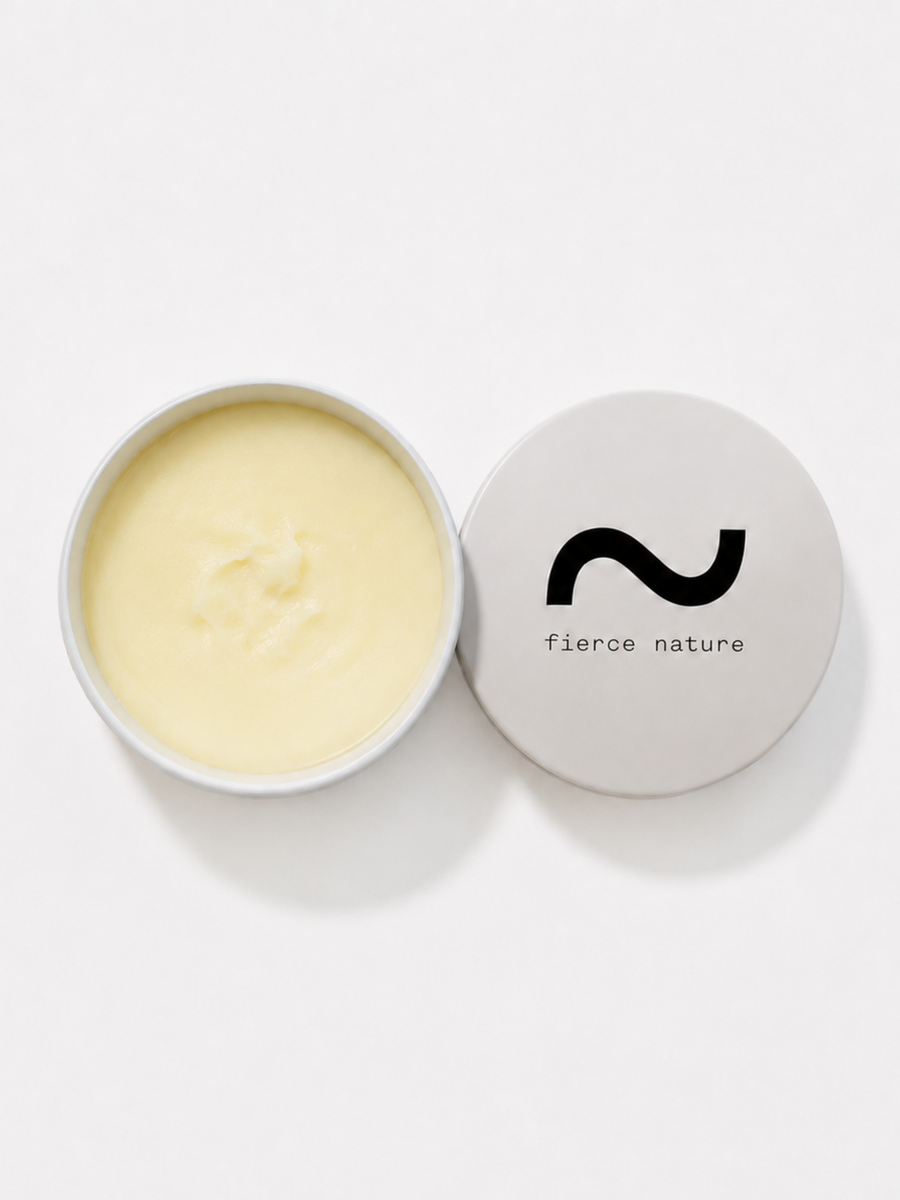
- For the last couple of years my favourite skincare brand has been Fierce Nature. I love their Lux Face Balm, the Vanilla Bean Nourish Balm, and their unscented Multi-Use Tallow Bar which I use for washing and shaving.
- The most recent change was giving away my perfume. It had sat untouched in the cupboard for over a year and I realised I simply didn't miss it.
Swap 03 · one pan at a time
The Kitchen
Next came the kitchen, and this is where going slowly really pays off.

Why it matters
Non-stick coatings can degrade with heat and wear over time, which is why scratched, older pans are the ones that need replacing first. These can leach forever chemicals into your food, which accumulate in the body.
Plastic and heat is the combination you need to be mindful of. Warm food sitting in plastic, or worse, heated in it, is a very easy thing to avoid once you're aware of it.
What I did
- We slowly replaced our non-stick cookware with stainless steel, cast iron and glass.
- Replacing everything at once is expensive, so we started with the pans we used most often and built up from there.
- We swapped our plastic food containers for glass, again as the old ones wore out.
- We don't own a microwave, but if you do: avoid heating food in plastic, and let hot food cool before it goes into a plastic tub.
Swap 04 · against your skin all day
Laundry
This was one I hadn't really thought about before, and it turned out to be one of the easiest wins of all.
Why it matters
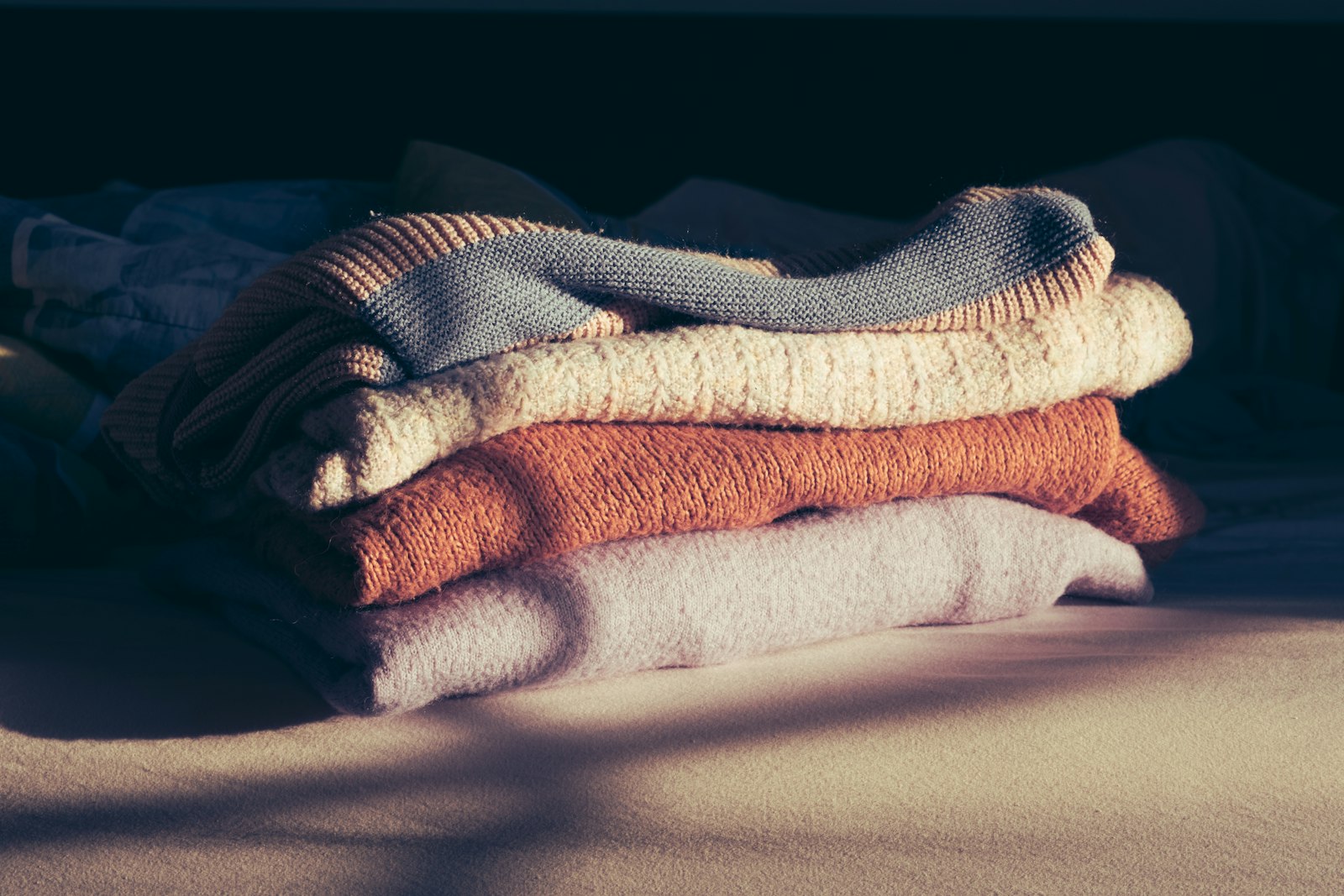
Your clothes, your bedding and your towels sit against your skin every single day and all through the night.
Whatever you wash them in doesn't entirely rinse away. It stays on the fabric, and that fabric stays on you for hours.
What I did
- At first I switched to what I could find in the supermarket, like Ecover. A step in the right direction, but many still contained added fragrance, so I kept looking.
- Eventually I found Miniml and I've never looked back. Plant-based, refillable, made in Yorkshire, naturally scented with essential oils, and genuinely affordable, especially bought in bulk.
- These days I use their toilet cleaner, washing-up liquid and liquid hand wash too.
Swap 05 · fewer bottles, not more
Cleaning Sprays
Once I'd changed the laundry products, cleaning sprays were the next obvious step.
Why it matters
Many conventional cleaning products lean heavily on synthetic fragrance, and they're used on the surfaces you touch, eat from and prepare food on.
One of the first things I learnt is that you don't need a cupboard full of different sprays. Most jobs need far less than the supermarket aisle suggests.
What I did
- For everyday cleaning I use simple things: white vinegar with a few drops of essential oil, and bicarbonate of soda for scrubbing. Use them separately though: mixed together they simply cancel each other out.
- When I'd rather buy something ready-made, one of my favourites is Purdy & Figg.
- My all-purpose citrus cleaner recipe is a few pages on, and it costs pennies to make.
The five words I look for
You do not need a chemistry degree, and you do not need to memorise a fifty-item list. These five cover most of what I personally avoid, and the first one does most of the work on its own.
Fragrance / Parfum
One word that can stand for a whole mixture of undisclosed ingredients. The single most useful thing to avoid.
Parabens
Used as preservatives. Look for anything ending in -paraben on the list.
Phthalates
Often hiding inside that word fragrance rather than listed on their own.
Triclosan
An antibacterial agent. If a product boasts about killing 99.9% of germs, check for it.
PFAS
The non-stick and stain-resistant family. Rarely listed plainly, so look for stain-proof and water-repellent claims.
If you only remember one
Make it fragrance. Avoiding that single word quietly removes a great deal of everything else on this page.
Fresh air is free
Indoor air is often more polluted than the air outside, and this is the one page in this guide where every single tip is free.
Open your windows every day
Ten minutes of cross-ventilation does more for your indoor air than any gadget.
Skip the plug-ins and wax melts
They release fragrance continuously into a closed room, all day, every day.
Skip the scented candles
They release synthetic fragrance and hormone-disrupting compounds into a closed room. My simmer pot (a few pages on) is a great way to make your home smell lovely, or alternatively you could buy an essential oils diffuser.
Dust and vacuum regularly
Household dust is where a lot of chemical residue quietly collects.
Take shoes off at the door
Free, instant, and keeps whatever is on the pavement off your floors.
Use your extractor fans
Cooking is a genuine source of indoor air pollution. Turn the fan on and open a window.
Simple, and cheap as anything
Citrus All-Purpose Cleaner
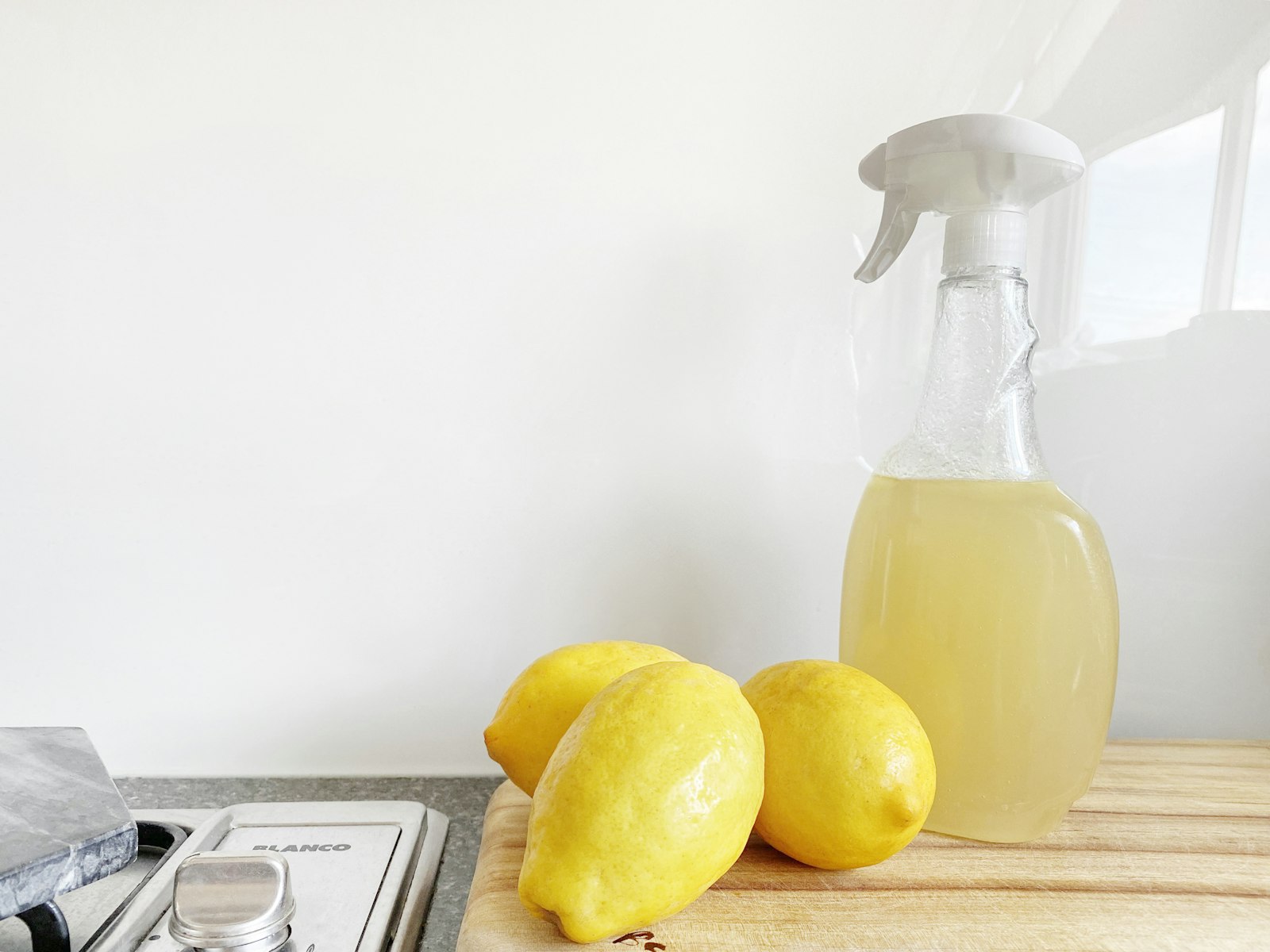
For everyday jobs like wiping down worktops, cupboard doors and sinks, this does the trick and costs pennies.
You'll need
- 500ml white vinegar
- Peel from 2 to 3 lemons or oranges
- Water
- A reusable spray bottle
How to make it
- Put the citrus peels into a glass jar.
- Cover them completely with white vinegar.
- Leave to infuse for 2 to 3 weeks somewhere out of the way.
- Strain the liquid into your spray bottle.
- Top up with equal parts water.
- Give it a shake before each use.
Please don't use vinegar on natural stone such as marble or granite. It can damage the surface over time.

My Favourite Natural Home Scent
One thing I don't miss at all is plug-in air fresheners. When I want the house to smell lovely, I make a simmer pot instead. It has become one of my favourite little weekend rituals.
You'll need
- 1 orange, sliced
- 1 lemon, sliced
- A few sprigs of fresh rosemary (optional)
- 2 cinnamon sticks
- Water to cover
How to make it
- Add everything to a saucepan.
- Cover with water.
- Bring to a gentle simmer on the hob.
- Top up the water as it reduces.
It makes the whole house smell warm, fresh and comforting, without a single synthetic fragrance.
My favourite swaps
Not a sponsored list. These are the things we genuinely use, built up slowly over thirteen years.
These are simply the products that have worked well for our family. There are lots of great alternatives, so don't feel you have to buy exactly what I use.
Some of these are affiliate links on my website, which means I may earn a small commission at no cost to you. I only ever share what I actually use. Full disclosure.
Things I don't stress about
Nobody talks about this part, and I think that's why so many people burn out on low-tox living within a month. Here is my honest list of things I genuinely do not worry about:
- Eating at a restaurant
- Allowing my children to have conventional treats occasionally
- Staying in a hotel
- Using a conventional product occasionally
- Not being able to buy everything organic (I prioritise the "dirty dozen")
- A candle at a friend's house
The whole philosophy in one line
Low-tox living is about what you do most of the time, in your own home, where you have control. It was never about being perfect everywhere else.
Don't throw it all away
The fastest way to give up on this is to try to do it all at once. It's expensive, it's overwhelming, and it's wasteful. So please, whatever you do:
Throw out all your plastic tomorrow
Use what you own. Replace it as it wears out.
Bin your entire make-up bag
Finish what you have, then choose better next time.
Spend thousands replacing your kitchen
Start with the pan you use most. Build from there.
Feel guilty about the shampoo in your shower
One conventional product does not undo everything else you're doing.
Instead: replace things as they wear out, use what you already own, and swap one thing at a time.
Jasmine's tip
If you're feeling overwhelmed, choose just one swap from this guide and forget about the rest for now. There's no rush.
One swap a month
Six months, six changes. By the end you'll have covered every high impact area in this guide, and it will barely have registered as effort or expense.
Filter your water
The highest-impact change, and the one you'll notice daily.
Swap your laundry detergent
Cheap, easy, and it touches everything you wear and sleep in.
Sort your cleaning sprays
Make the citrus cleaner or pick one refillable brand.
Deal with fragrance
Bin the plug-ins. Read the labels on what you put on your skin.
Start on cookware
Change the pot or pans you use most, and build up from there.
Move to glass storage
As your plastic tubs wear out, swap them over.
One swap. Then another.
My low-tox journey started in 2013.
It wasn't fast. It wasn't perfect. And it definitely wasn't expensive.
Every year I learnt something new. Every year I made another swap.
Looking back now, those little changes have completely transformed the way our family lives, and not one of them felt dramatic at the time.
So please don't feel you need to be perfect. You don't need to replace everything overnight, and you certainly don't need to feel guilty about what's still in your cupboards.
Every swap you make lowers your overall load. Small, consistent changes are what create lasting habits, and lasting habits are what make this sustainable.
My hope is that this guide helps you make your very first swap.
Because that really is all it takes. One swap. Then another. And before you know it, you'll look back and realise just how far you've come.
Thank you
Thank you for reading, and for caring enough about your home to get this far. I hope this guide makes your first swap feel easy.
"Low-tox living is a direction, not a destination."
I'd love to know which swap you're making first! Tag me on Instagram @jazzywellnessvibes or send me a message. I genuinely love seeing your progress and hearing what's helped you.
Jasmine Elena
Disclaimer. The information contained in this guide is for educational and informational purposes only and is not intended as medical advice. It is not intended to diagnose, treat, cure, or prevent any disease, nor should it be used as a substitute for professional medical advice, diagnosis, or treatment. Always seek the advice of your physician or another qualified healthcare provider with any questions you may have regarding a medical condition. The information provided reflects my own experience and current understanding, and is subject to change as new research becomes available. The author makes no representation or warranties concerning the accuracy or completeness of this guide's contents. Any reliance you place on such information is strictly at your own risk. This guide contains affiliate links. If you choose to buy through them I may earn a small commission at no extra cost to you. I only ever recommend products I use and genuinely love. All trademarks, service marks, trade names and logos are the property of their respective owners.